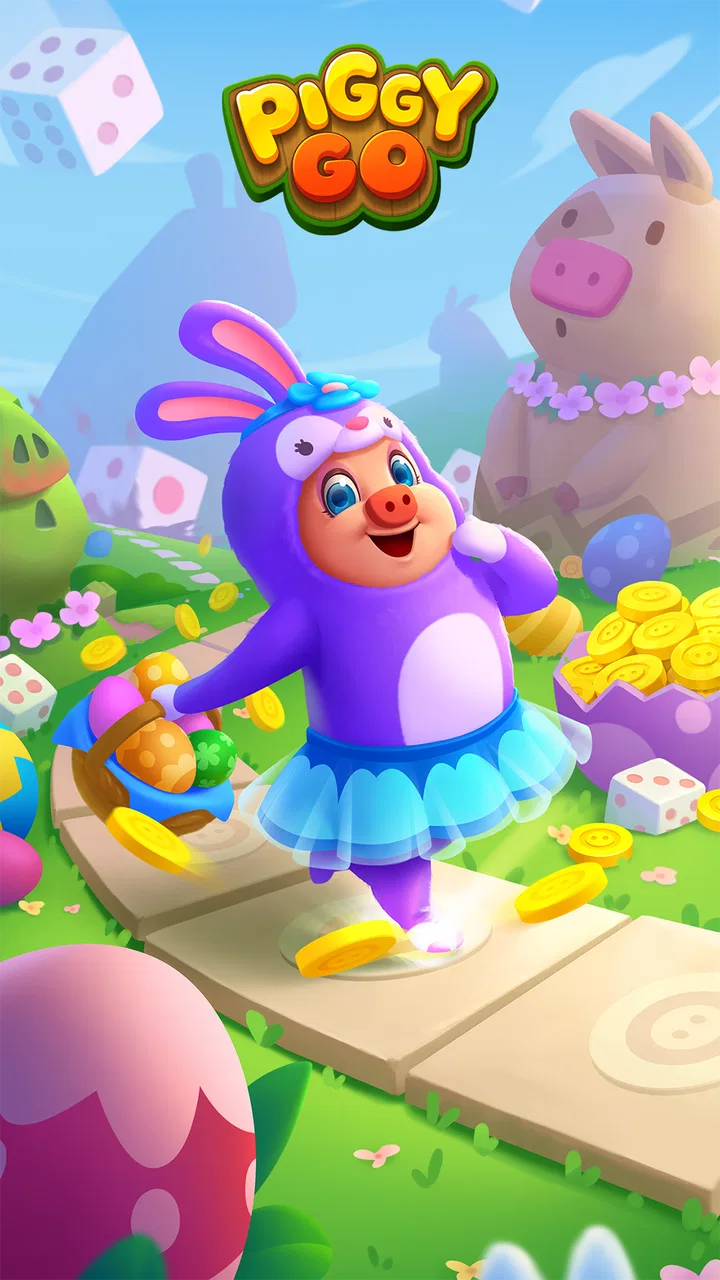
Piggy GO - Clash of Coin
- 4.8
- Rating
- 10.00M
- Installs
- Free
- Price

 Analysis by App-foxy
I spent time with Piggy GO - Clash of Coin as a light, social coin-collecting game, and my first impression was clear: it is built for short bursts of play rather than long, skill-heavy sessions. The central loop is easy to understand. You move forward, collect resources, raid other players, and use your progress to keep advancing through a colorful casual adventure. It feels approachable within minutes, but there is enough competition and upgrading to give those small sessions a reason to continue.
The game comes from Forever9 Games and is free to download, with optional purchases ranging from $0.99 to $149.99 per item. That price range matters because the basic experience is accessible without paying, while the in-game economy can make spending tempting when progress slows. I would recommend it to someone who enjoys checking a game several times throughout the day, especially when social competition and collection systems are more appealing than precise controls or a long story.
How the current version feels in everyday play
The current version is 4.44.0, and the overall experience feels like a mature mobile game rather than a small experimental release. It was released on Jan 23, 2019, so it has had time to establish its identity. The store summary focuses on finding and raiding the Cash King while advancing toward becoming the Coin Master, but in practice I found the appeal less about one dramatic objective and more about repeating a satisfying cycle: take a turn, see what the result gives you, improve your position, then decide whether to keep playing or come back later.
You May Also Like

 Pandora - Music & Podcasts
Pandora’s Music Is Easy to Start, but Harder to Recover
Pandora’s strength is its low-effort path from a seed to a station. Its weak spot is how much confidence it asks you to place in connection, setup, and quiet recovery.

 8 Ball Pool
 Is Built on Rivalries, Rematches, and Routine
A close look at the rivalries, rematches, shared routines, and unanswered safety questions that turn a quick pool match into a persistent mobile community.

 Samsung Music
’s Quiet Strength Is Playing What You Already Own
Its reach comes less from spectacle than from dependable access to a personal library. That simplicity is both the app’s strongest retention engine and its ceiling.

 AccuWeather: Weather Radar
AccuWeather Review: A Quick, Clear Forecast for Everyday Decisions
For everyday plans, the best forecast is the one you can understand quickly. AccuWeather makes rain timing, radar, and local conditions easy to act on, with a few trade-offs.

 Hill Climb Racing
Why Hill Climb Racing Still Turns Crashes Into One More Run
A tiny car, a bumpy hill and one more upgrade: Hill Climb Racing keeps resurfacing because its simple chaos makes every near-miss feel personal.

 AliExpress - Shopping App
AliExpress Makes Global Shopping Feel Personal, but Shoppers Bear the Risk
AliExpress turns a global marketplace into a pocket-sized discovery engine. Its reach is useful, its shopping loop compelling, and its trade-offs easy to miss.
More From Our News Desk
View All News


That structure makes the game particularly comfortable on a phone. I can open it while waiting for an appointment, play through a brief opportunity, and close it without feeling that I abandoned a complicated mission. It does not demand the concentration of a puzzle game with strict timing, nor does it ask for the commitment of a role-playing game with lengthy dialogue. The trade-off is that the moment-to-moment interaction can feel repetitive if you want constant novelty.
The category is casual, and that description fits better than calling it a traditional strategy title. There are choices to make, but the game is driven heavily by chance, available turns, and the rhythm of its reward systems. I enjoy that low-pressure format when I want something entertaining without learning a large rule set. Players who expect every victory to come from planning and execution may find the outcomes less satisfying.
The age rating is Everyone 10+, which matches the playful presentation and competitive theme. I would still suggest that families look at the purchase settings before handing the device to a child. The game is free to start, but optional items can become part of the conversation once a player wants to continue immediately or accelerate progress.
A better way to approach the first sessions
My advice is not to treat every available action as something that must be used immediately. The game is more enjoyable when I think of each session as a small decision point. If I rush through every opportunity simply because it is available, the experience can turn into a quick check-in with little sense of control. Instead, I pay attention to what I am trying to improve and stop when the next action feels more like chasing a reward than making useful progress.
This is one of the less obvious strengths of the design: it works well as a background game. I can give it a few minutes during a break, but I do not need to make it my main activity. That makes it a good companion to a busy routine. It is less suitable for someone looking for a complete evening game with deep exploration, demanding combat, or a carefully paced campaign.
What the progression loop encourages
The appeal comes from visible movement. Advancing, collecting, and raiding create a steady sense that each short visit contributes to a larger position. Even when a session does not produce an exciting result, the possibility of the next useful turn keeps the loop moving. I found that the strongest motivation was not a single feature but the combination of small gains and the chance to interfere with another player’s progress.
That competitive element also creates the game’s main emotional swing. A successful raid can make a short session feel worthwhile, while an unlucky result can make the same amount of time feel empty. Because of that, I recommend approaching the game as entertainment built around uncertainty, not as a reliable way to achieve a specific target on demand.
How the game has evolved and what that means now
The release history gives the game useful context. A title that began in 2019 and has reached version 4.44.0 is no longer being judged only as a new idea. Existing players are likely to care about continuity, familiar progress, and whether the current build still supports the quick routine that made them stay. New players, meanwhile, can enter a more established experience without having to follow its entire history.
I see the current version as an evolution of a simple coin-based concept into a longer-running social routine. The basic appeal remains easy to grasp, but the surrounding progression gives players more reasons to return than a one-off arcade game would. That longevity is reflected in its broad reach: it has passed ten million installs, carries a 4.8 average from around 663 thousand ratings, and has accumulated roughly 50 thousand written reviews.
Those figures do not guarantee that every player will enjoy the same parts of it, but they do suggest that the format has connected with a large mobile audience. In my experience, the reason is accessibility. I do not need advanced gaming knowledge, a powerful device, or a large uninterrupted block of time to understand what I am doing. The game explains itself through repeated actions rather than forcing me to study a manual.
At the same time, a long-running casual game can feel busier than a newcomer expects. Returning players may appreciate the sense of an established world and ongoing progression, while first-time players might need a little patience before the different rewards and decisions feel natural. I would not call the learning curve difficult, but I would give the opening sessions enough attention to understand which actions are genuinely helping rather than simply producing another flashy result.
How existing players may experience the update path
For someone already invested in the game, the current version is best viewed as part of an ongoing routine rather than a completely different product. The important question is whether the familiar loop still feels rewarding. If you enjoy collecting, checking progress, and competing through raids, the established format should remain recognizable. If you were hoping for a fundamental shift toward skill-based gameplay, a richer story, or a more traditional strategy structure, a version number alone should not raise those expectations.
I also think long-term players should periodically reassess their spending habits. The free entry point makes it easy to begin casually, but repeated small purchases can change how the game feels. My own preference is to decide on a limit before playing, rather than making a purchase in response to a disappointing result or a desire to continue immediately. That keeps the game in the category of casual entertainment instead of turning progress into a financial contest.
Where it stands beside similar casual games
Compared with a conventional match-three game, Piggy GO places more emphasis on ongoing accumulation and social interference than on solving a board through skill. Compared with an idle game, it feels more interactive because I am making choices around raids and progression instead of merely watching numbers rise. Compared with a board-game adaptation, it keeps the luck-driven movement but presents it in a more persistent mobile format, where returning later is part of the rhythm.
Those comparisons also show when another option may be better. I would choose a match-three title when I want a clear puzzle that rewards concentration. I would choose an idle game when I want almost no decisions. I would choose a deeper strategy game when I want outcomes to depend mainly on planning. This game sits between those experiences: more involved than passive progression, but not demanding enough to satisfy players who want every result to be earned through precise control.
Practical strengths hidden inside the simple formula
One useful strength is how naturally the game fits fragmented time. A realistic example is a commuter who has ten minutes before work, another short break at lunch, and a few minutes in the evening. Each visit can serve a different purpose: checking progress, taking available actions, or deciding whether the next step is worth pursuing. That flexibility is more valuable than it sounds because many mobile games punish interruptions, while this format is comfortable with them.
A second insight is that stopping can be a strategic choice, even in a casual game. When I continue only because I have already invested time in a session, the reward loop becomes less enjoyable. I get better results from setting a simple stopping point: finish the useful actions, review what changed, and return later rather than trying to force a lucky outcome. This does not remove chance, but it prevents the game from consuming attention without giving much back.
A third trade-off concerns social competition. Raiding gives the progression a personal edge that ordinary collection games often lack. It makes the world feel more active because another player’s position is not just decoration. However, that same feature may bother people who prefer cooperative or completely peaceful games. If losing resources or being targeted feels frustrating, the competitive layer can overshadow the bright presentation.
A fourth practical point is device suitability. The minimum operating system is Android 7.0, which makes the game accessible to many older Android users. That is useful for players who do not replace their phone frequently. I would still judge the experience on the individual device, especially if storage, battery life, or background activity is already a concern, but the stated system requirement is not demanding by modern mobile standards.
Finally, the game is easier to enjoy when I separate entertainment value from progression speed. Paying may offer a faster route through some moments, but faster is not automatically better if the fun comes from checking in and seeing gradual improvement. Players who can accept a slower free path are likely to get more value from the download. Players who dislike waiting may feel pressure from the purchase system sooner.
Questions I would ask before installing
If you are wondering whether it can be played casually, my answer is yes. The short-session structure is one of its clearest advantages, and you do not need to dedicate a full evening to understand or enjoy it. If you are asking whether it is completely skill-based, I would say no. Luck and the game’s progression economy play an important role, so it is better suited to players who enjoy uncertain outcomes.
If you are concerned about paying, you can begin for free, but I would approach the optional purchases carefully. The listed items range from $0.99 to $149.99 each, so the difference between occasional spending and expensive spending is substantial. I recommend disabling or protecting purchase access if the device is shared, and deciding in advance whether you want to spend anything at all.
If you are joining friends or other players, the social competition is likely to be more interesting than playing in isolation. Raiding and comparing progress give the routine more personality. Still, the game should not be chosen solely because of a promise of constant interaction; its strongest experience remains the repeated personal loop of collecting, advancing, and returning for another chance.
If you want a story-led adventure, demanding strategy, or a game where every outcome is directly controlled, I would skip this one. Its charm depends on accepting a lighter structure. I would also skip it if repeated reward cycles quickly lose their appeal, because the central rhythm is intentionally familiar rather than endlessly reinvented.
What I would watch as a returning player
When I look at a long-running game like this, I pay attention to whether new versions preserve the quick, understandable loop while keeping the overall experience from becoming cluttered. Version 4.44.0 shows that the product is still maintained as an active release rather than being left in its original form. The useful question going forward is whether future changes continue to make short sessions feel meaningful without adding pressure that overwhelms the casual audience.
I would also watch the balance between free progression and optional purchases. A healthy version of this game should let a patient player feel that returning regularly matters, while still giving paying players a reason to spend without making everyone else feel blocked. That balance is especially important here because the game’s greatest advantage is its easygoing accessibility.
Another point worth watching is how the social layer develops. Raiding is more memorable when it creates playful rivalry, but it becomes tiring if it feels like a constant setback. The best direction would preserve the excitement of affecting another player while giving people enough control to decide how seriously they want to participate.
After playing it, I see this as a dependable choice for fans of casual mobile games that mix collection, luck, progression, and light competition. It is colorful, easy to pick up, and well suited to spare minutes. Its limitations are just as clear: repetition, chance-driven results, and the possibility that optional purchases can make progress feel less relaxed. My recommendation is to try it free, set a spending boundary, and judge it by the enjoyment of the routine rather than the speed of advancement.
For the right player, that routine is enough. I would hand it to a friend who likes checking a game throughout the day, enjoys playful rivalry, and does not need deep controls to stay interested. I would point someone else toward a puzzle, idle, or strategy alternative if they want a more focused challenge. Piggy GO succeeds because it knows what it is: a lightweight coin-and-raid game designed to make small visits feel rewarding, provided you are comfortable letting chance and patience share the driving.
FAQs for Piggy GO - Clash of Coin
01What is Piggy GO - Clash of Coin?
Piggy GO - Clash of Coin is a casual multiplayer board game where you roll dice, move around colorful maps, collect coins, build and upgrade your town, and interact with other players. Its gameplay combines luck-based movement with light strategy, card collection, events, and social features. Each round is easy to understand, making it suitable for short play sessions on Android and iOS devices.
02Is Piggy GO - Clash of Coin free to download and play?
Yes, Piggy GO - Clash of Coin is generally free to download and play. However, it includes optional in-app purchases for items such as dice, coins, special bundles, or other limited resources. Progress is possible without paying, but free players may need to wait for energy or dice to refill and may encounter advertisements or purchase offers during regular gameplay.
03Does Piggy GO - Clash of Coin require an internet connection?
An internet connection is normally required for most of Piggy GO - Clash of Coin’s features. Online access supports multiplayer interactions, account synchronization, events, rankings, rewards, advertisements, and communication with the game servers. Although some screens may load briefly without a connection, the main gameplay experience is designed for online use, so stable Wi-Fi or mobile data is recommended.
04Is Piggy GO - Clash of Coin suitable for children?
Piggy GO - Clash of Coin uses bright cartoon graphics and simple mechanics that can appeal to children, but parents should review the game’s social and purchasing features first. Depending on the version and device settings, the app may include advertisements, in-app purchases, online interactions, and promotional messages. Parental controls and purchase restrictions are recommended for younger players.
05What are the main advantages and disadvantages of Piggy GO - Clash of Coin?
The main advantages are its colorful presentation, accessible dice-based gameplay, frequent events, town-building progression, and social interaction with friends or other players. It is easy to start and works well for casual sessions. On the other hand, progress depends heavily on luck, resources can run out quickly, advertisements and purchase prompts may appear, and advanced progression can feel slower for players who do not spend money.
Pros
- Simple tap-based gameplay that is easy to learn within minutes.
- Frequent events add variety beyond the standard board progression.
- Collectible cards provide extra goals for dedicated players.
- Social features let you interact with friends and compete on leaderboards.
- Bright graphics and playful animations make the game feel lively.
Cons
- Progress can feel slow without spending coins or premium resources.
- Random dice rolls make important moves heavily dependent on luck.
- Ads and purchase prompts may interrupt the experience for some players.
- The large number of currencies and items can be confusing at first.
- Online features require a stable connection to work properly.

Piggy GO - Clash of Coin
Gallery